Showing posts with label books. Show all posts

Sunday, January 05, 2025

Litany For A Broken World

Cover* for Litany For A Broken World

After six years of work ...

After 3 (or maybe 4) false starts where I discarded 20,000 words and began again ...

After multiple crises of faith in my ability to write ...

After the help and encouragement of my family, writing friends, and communities ...

After a writing residency at the Eagle Hill School ...

After a computer meltdown and repair ...


I give you Litany For A Broken World.  

A modern adult reworking of/homage to The Wizard of Oz that takes place in a Boston homeless encampment. 

A young girl's disastrous first foray through the multiverse cleaves her from her family and abandons her in a homeless encampment, adrift in a world and a body not her own.

A doctor struggling with grief volunteers for the annual Boston homeless census and is confronted by the impossible and her deeply buried childhood trauma.

A lonely, disaffected seer rejected by those he seeks to help is drawn from his home by a desperate call across the world walls.

When the three strangers, each broken in some way, are drawn together in a conflict between those with the ability to travel the multiverse and the organization seeking to exploit them, they must risk everything that matters to heal the fractured places in themselves and throughout reality.

Coming February 10, 2025


 Pre-orders are now live for the ebook version. (Available at all retailers). Print is forthcoming.

 ______________


This is the book that nearly broke me as a writer. One that wouldn't let me go once the characters took hold in my subconscious. 

As frustrating as my slow writing process was over the past 6 years, I don't regret the work this book required to reach the finish line. It was an ambitious story. 6 years ago, I didn't have the skills to do it justice. None of what I wrote and discarded was ultimately wasted, even as it wasn't used in the novel. Those words, those attempts, were all part of what I needed to level up in my writing ability. 

And isn't leveling up critical to the creative process? I'm not in competition with any other author or book out there in the world. I'm here to work harder and write better than my past self. To grow as a creator. To fail better in the immortal words of Samuel Beckett. 

I hope I have failed better with Litany. And I will continue to work and stretch as I complete book 2 in the Entangled Realities series, Every Sky A Stranger. I'm currently just shy of the 25% mark in drafting and making good progress. 


_______________


If you are a reviewer/book blogger and would like a complimentary ebook copy to review, please email me: lisa@ljcohen.net


*Cover art created by the lovely and talented Chris Howard


Subscribe to BlueMusings and receive my short story collection, STRANGER WORLDS THAN THESE, as my gift.


Blue Musings is a low volume e-newsletter containing notifications about book releases, sales, recommendations, and free original short fiction in multiple drm-free formats. Your privacy will always be respected.

Wednesday, March 06, 2019

You Must Read This: Madcap Superhero Edition


I don't write official reviews. That's a choice I made after I published my first novel as it feels like a kind of conflict of interest, especially when reading books in the spec fic world where I hang my own writing hat. (Other authors feel differently, and I respect that.)

What I will do is evangelize about books I've read and loved. Today I want to talk about The Brothers Jetstream and its author, Zig Zag Claybourne.

I met Clarence Young (Claybourne's cover identity) at Boskone 2019. What caught my eye was this incredible purple greatcoat he was wearing.

Readers, I coveted it. Hard.

But I didn't have the over 6' tall frame or the gravitas to have pulled it off. So I struck up a conversation with the man instead and ended up buying his book, The Brothers Jetstream: Leviathan.

Why, you ask?

The purple coat may have reeled me in, but when Young described his novel as his homage to one of my hands-down favorite movies ever -- Buckaroo Banzai -- it was a no brainer.

This delightful, chaotic, romp of a novel engaged me from start to finish.  I normally race through books, but I forced myself to savor this one slowly and was rewarded by my patience because I got to spend more time with Milo and Ramses Jetstream and their brilliant rag tag crew.

Telling you what this book is about is almost besides the point. Yes, there are the eponymous superhero brothers. There are also sentient whales, vampires, Alanteans, mysterious cabals, an arch enemy (The False Prophet Buford), the leviathan who was there at the start of the universe, mystics, psychics, angels, clones, Djinn  and so much more.

The ten-thousand foot view of the plot is simple: the world is in peril. The brothers and their crew need to save it "one last damned time." The execution of this wondrous novel is anything but simple. Don't expect a paint-by-numbers plot: the cast of characters is large (and all delightfully named!), the pace is fast and furious. Young, AKA Claybourne, drops us into his fertile imagination and leaves us there to sink or swim. But if you're up for an adventure, dive in. You won't be disappointed.

I could absolutely see Buckaroo Banzai wanting to hang out with the Brothers Jetstream. I know I do.


Subscribe to BlueMusings and receive my short story collection, STRANGER WORLDS THAN THESE, as my gift.


Monday, January 08, 2018

My Arisia Schedule


I'll probably be wearing my TARDIS sneakers. . . 


This coming weekend, I'll be attending Arisia, one of the Boston area Science Fiction and Fantasy conventions. It's one of my favorite cons - essentially a 4 day party with a hotel full of fellow geeks.

Cosplayers and gamers and authors, oh my.

In addition to several panels and a reading, I'll be hanging out in the dealer's room with the lovely ladies of Broad Universe.

I'll have copies of my novels to autograph and look forward to chatting with readers, friends, and fans.

I hope to see you there!

Broad Universe Rapid-Fire Reading Adams Sat 10:00 AM

Description Come discover your new favorite writer as members of Broad Universe read short excerpts from their work. Each writer has just a few minutes to show you what she’s capable of! We offer chocolate and the chance to win prizes. Broad Universe is an international organization that supports women writers, editors, and publishers.


Kids and Families on the Autism Spectrum Burroughs Sat 11:30 AM

Description In this open-ended discussion, we will explore a wide range of issues related to children, parenting, communication strategies, schooling, and family issues that often come up when someone in the family (or perhaps more than one person!) is on the autism spectrum. The goal is for everyone to come away with a better understanding of how to work with themselves and with the people around them, whether they identify as an Aspie or not. Bring your questions!
Prospective participant information Panel participants can be people who identify as on the spectrum, those who are in close relationships with people who do, or professionals who have experience in this area.

Technology's not a Cure: Disability in SFF Burroughs Sat 4:00 PM

Description Uncanny Magazine's _Disabled People Destroy Science Fiction_ Kickstarter reached almost all of its stretch goals, and completed funding. _Defying Doomsday_, an anthology of post-apocalyptic survival fiction that focuses on disabled characters was published in 2016. The conversation around disability in SFF is growing, but there are still many problems and problematic tropes in common use. Where do we, as a genre, need to go to create a better genre for disability representation?


Writing Series, Sequels, and Spin-Offs Douglas Sun 2:30 PM

Description It's no secret that book series have a better chance of discoverability. What’s the secret to writing a successful series? How do you plan and develop multi-book series that sell? Create series arcs? And how do you keep track of multiple plotlines and characters across many books? How can you expand existing material to create a series? And when is it time to pull the plug and move onto other things?


Oh, and I'll also be displaying my ceramics in the art show!


email:

  • Free eBook
  • Free/DRM-free short fiction
  • publication news

Wednesday, August 02, 2017

And so it begins. . . Again


This is the start of Halcyone Space, book 5. After letting the characters incubate in the back of my head for a few months, it was time to figure out the major goals and issues for each of them. This will help me form the main plots and subplots that form the core of the book.

I don't typically do a formal outline, though I will plan out several scenes ahead with one sentence 'blurbs' and once the story really starts cooking, I'll know where each character is and where they need to go. And I do know how the book will end. At some point, near the 75% mark, I typically go back and outline the entire project so I have a sense of its organization. I use this as a revision tool.

I have colleagues that write complete and detailed outlines before starting a single word on the story. That's not my process, but it's no less useful and valid. Don't let anyone get away with saying there's only one way to write a novel.

These beginning steps take some time. Once I find the flow, the story will move more quickly. Having done this a time or three already, I don't panic when I don't make my wordcounts for the day in these early stages.

There is a huge advantage to having gone through the process of idea to beginning through middle and finishing. It's one of the reasons I think it's important not to rewrite your first book over and over again, but to move on to something new. You can always go back to the earlier project and you'll have grown as a writer when you do. (Though sometimes even experience cannot help - I went back and did 2 major rewrites of Heal Thyself and it's still not ready for prime time. I haven't given up hope. Yet.)

I didn't know that when I started on my first novel in 2004. I thought if I kept at it, I could make it work. Four rewrites later and it's still trunked. I suspect no amount of poking at it will bring it to a publishable state. Trust me on this. It's 150,000 words of confused fantasy cliches and badly overwrought prose.

Books 1 through 12 represent my finished novels. 13 and 14 are works in progress. The ones in bold have been published.

1. 2004-6 Wings of Winter (trunked)
2. 2005-2006 MindBlind (trunked)
3. 2006-2007 House of Many Doors
4. 2007-2008 Heal Thyself
5. 2008-2009 The Between   (pub 2012)
6. 2009-2010 Future Tense  (pub 2014)
7. 2011-2012 untitled ghost story
8. 2012  Derelict   (pub 2014)
9. 2013-2014 Time and Tithe  (pub 2015)
10. 2014-2105 Ithaka Rising  (pub 2015)
11. 2015 - 2016 Dreadnought and Shuttle (pub 2016)
12. 2016 - 2017 Parallax (pub 2017)
13. 2017 Vito Nonce Project (in progress)
14. 2017 Halcyone Space book 4 (in progress)

That list comprises well over a million words of fiction. (And this doesn't count short stories.) Some of it unpublishable either for issues of quality, premise, or market. But each of the books I completed taught me invaluable lessons and made the next book better.
 
Halcyone Space, book 4, is my 14th novel.  (Not counting the 2 projects in the mid 2000's not listed here that I wrote about 30K each on and abandoned for various reasons.) Knowing what I know now about my process, (and barring any major catastrophe) I am confident that books 13 and 14 on this list will be finished, revised, polished, edited, and published.

At some point, I'll feel comfortable to share snippets of the work in progress.

Stay tuned!

#SFWApro


email:

  • Free eBook
  • Free/DRM-free short fiction
  • publication news

Monday, July 03, 2017

I made a thing


When I need to recharge, I do better when I have a project to work on, rather than deal with unstructured time. So when a friend posted an image of miniature books on Google Plus, I was determined to figure out how to make one.


I'll be on program at Readercon later this month and I knew these would make eye-catching 'swag' to give away.

First, I looked at sources to buy dollhouse supply mini books. They do exist, but they are expensive - with the shipping, probably $0.40 or $0.50 each. I figured there had to be a simple way to make them.

Then I cracked my knuckles and fired up my search engine. I found this tutorial:


I experimented with different sizes of paper, and ended up cutting down 8 1/2 x 11" printer paper to several 3x5 rectangles. I then 'shrunk' the full cover of DERELICT to 1.25" by .80", printed it out, cut it to size, and glued it on to the little blank book.

This was my first proof of concept version:


Then I printed the cover on photo paper and at a higher resolution. The books came out much, much better with a clearer cover image and a more substantial feel.


Cute, right?

In an effort to cut down on the work involved, I found 3x5 scratch pads at Staples with paper that was almost as thin as origami paper. 

Next step included adding some information inside the little book so someone could find and buy the book if they were interested. Luckily, I found some peel and stick labels.


And finally, I glued a bit of waxed twine to use as a loop for a pendant.


Now I have an opening to have a conversation and offer someone my card (or their own miniature book!)


My plan is to make a few dozen of each of the four book in the Halcyone Space series. It's a good project to have while I watch the Redsox play. :)

If you're at Readercon, come find me at the Broad Universe table and you can have a tiny book!

#SFWApro


email:

  • Free eBook
  • Free/DRM-free short fiction
  • publication news

Wednesday, June 07, 2017

Happy Book Birthday


I have done everything I can to give PARALLAX its best chance for success. The rest is not up to me.


Last night on twitter, I posted a bit about this - how by the time a book is out, it no longer belongs to the author. And let me tell you, that lack of control is terrifying.

Think about it: For the time it takes to draft a novel, the author is the Supreme Being On High. We create worlds out of our imaginations. We literally put words into our characters' mouths and thoughts into their heads.

So forgive me if I find this phase of the process enormously nerve-wracking. 

I wrestle with the hope that PARALLAX will find its readership and be a big success along with the dread that it might not earn out its production expenses. Realistically, I understand that later books in a series never sell as many as the initial books. I just hope I'm in that sweet spot where it will sell enough to keep the series going and perhaps reignite interest in the first books.

There are some wonderful opportunities on the horizon including a partnership with the folks who brought you HerStoryArc in their new F-BOM (Feminist Book of the Month) project.  I'm very excited at the prospect of bringing the Halcyone Space books to a new readership.

But, still I worry. It's the natural habitat of the writer. I'll be anxious about PARALLAX for some time to come, through it's first few weeks of sales, its first reviews. I'll worry that someone doesn't like it. Then I'll worry that no one's talking about it.

While I hate to say this part of it hasn't gotten any easier for me, despite the fact that PARALLAX is my 7th published novel, at least I'm in familiar territory. And that means I can acknowledge the intense emotions and keep moving forward.

I'm already immersed in a new world with new characters on a new project. That's the only antidote I've found to writer's anxiety.

And while I have your attention, let me remind you that PARALLAX is book 4 of Halcyone Space and all 4 books are available widely, wherever ebooks are sold. They are also available in trade paperback editions. You can find links to all purchase venues at www.ljcohen.net.

The novels of Halcyone Space

DERELICT (Halcyone Space, book 1): A group of teens stranded on a sentient spaceship must work together or risk being killed when the ship's AI wakes believing it's still fighting the war that damaged it decades ago.

ITHAKA RISING (Halcyone Space, book 2): A young computer genius struggling to function with a grievous head injury is willing to risk his life to get a black market neural implant, but what he finds is a planet that shouldn't exist and a rebellion that threatens the stability of the Commonwealth.

DREADNOUGHT AND SHUTTLE (Halcyone Space, book 3): When a materials science student gets kidnapped, she's drawn into a conflict between the young crew of a sentient spaceship, a weapons smuggling ring, and a Commonwealth-wide conspiracy and must escape before her usefulness as a hostage expires.

PARALLAX (Halcyone Space, book 4): Halcyone's crew is drawn into a conspiracy threatening to reignite a galactic war when they discover the hidden power brokers who have been quietly manipulating the Commonwealth for decades.

#SFWApro


email:

  • Free eBook
  • Free/DRM-free short fiction
  • publication news

Friday, May 26, 2017

The process of Parallax

The novels of Halcyone Space


One of the questions I'm frequently asked by writers and non-writers alike is what does my process look like.

So I thought I'd do a quick overview, using PARALLAX as an example. The way I do this is by no means the only way or the best way; it's what I've settled on after writing more than a million words of fiction over the past 13 years. As always, YMMV. (Your Mileage May Vary)


July 2016:  Begin drafting during a week long retreat at a friend's summer home in Vermont.

This is the phase where I take a cheap Staples brand single subject spiral bound notebook and start brainstorming. Since this is book 4 of an ongoing series, it also means creating a document that outlines who knows what when at the end of book 3. It also includes reviewing the private wiki I have for my series bible.

August - December 2016 : Focus on drafting the story, including the goal of 1,000 words a day, for an average of 5,000 words a week. In any given week, I may not reach this goal, but I complete an approximate 100,000 word draft in 5 months.

December 2016 : After a 2 week hiatus after completing the draft, return to the story and complete a rough outline of the 4 quartiles of the book( This step is roughly based on Larry Brooks' Story Engineering and is particularly helpful in assessing the pacing of the story) as well as a chapter by chapter precis of each separate storyline. (Ro & Nomi, Barre, Micah & Dev, Jem & Gutierrez)

Because this book contains 4 storylines that must intersect, it is a more complex task than in other of my novels. I used a large white board. Across the top were the characters, down the side were the days, so I could see at a glance where everyone was at any given point in time as the story moved forward.
Initial 'alpha' read feedback received from several intrepid readers. First revision completed incorporating their story-level (big picture) feedback.

January 2017 : The completed 1st revision is sent to a cadre of beta readers, some who have read all of the series to this point, others for whom this is their first story in the series. This is a deliberate strategy because I want each story to be able to stand alone as well as work well together.
At this point, I solicited a back cover blurb from a writer in my genre.

February 2017 : Beta feedback comes in. It is read, assessed, and correlated. What I look for is patterns and consistency. If more than 1 reader has feedback on the same issue, it's flagged to review. If a single reader has a strong piece of feedback, it's flagged for review. Other issues - especially ones where it's what one reader has an issue with, but another notes it's what they love - are typically looked at as individual taste.
Several readers give me fairly substantiate critical feedback which requires careful assessment and consideration. I make changes to the story as a result.
March 2017 : As a result of the beta feedback, the 2nd revision is completed. After another few week hiatus, I print the manuscript out and do a 3rd revision.
Cover artist provides the initial draft of what will by month's end become the final cover.
Draft manuscript is sent (marked as such) to the author who agreed to read in order to provide a blurb.

April 2017 : Manuscript is sent to the editor. Continuity edits, copyedits, and proofing is done. The manuscript is returned.

May 2017 :  Editor's edits/suggestions are reviewed, considered, and incorporated in what is now the 4th and final revision. The manuscript enters the production phase.
Front and back matter is generated, beta readers are contacted for permission to thank them in the acknowledgments.
eBook formatting is done (using Sigil, an epub editor), print typography is done. Both take about 20 - 25 hours inclusive, as I have created templates and an efficient workflow for both.
Cover typography is created to echo the look/feel of the other books in the series. Files uploaded to CreateSpace and physical proof ordered. 
June 2017 : Publication. Final novel is approximately 110,000 words. During multiple revisions, approximately 15,000 words were excised, 25,000 words written/rewritten.


As the author/publisher, I:
write the draft
revise the draft
code the ebook
format the print book
give notes to the cover artist

I outsource:
the editing
cover art
cover typography/design

The key is to know your strengths and play to them. Hire what you are not comfortable and skilled in doing. Set a schedule if that helps you keep on track. Having been through this process multiple times now, I can reasonably and reliably hit this production schedule.

If you are working with an external publisher or publishing multiple books a year, your timeline will look different.

Feel free to ask me anything about the process, or describe how yours is either similar or different.

#SFWApro


email:


  • Free eBook
  • Free/DRM-free short fiction
  • publication news

Thursday, May 18, 2017

Reality of a writing life

I have a friend who is struggling with the distance between where he'd hoped he'd be in his career and where his career stands.

We've had a lengthy email conversation and I thought I'd pick up on some of the points and show them here.

This is my experience and I have some sense from other personal stories that it's not atypical.

Written
Title
Comments
2004-2005 Wings of Winter 150K mess. Trunked.
2005-2006 MindBlind Urban fantasy/thriller. Trunked.
2006-2007 House of Many Doors
YA ghost story. The book that landed me an agent from queries. Agent unable to sell.

I still believe it’s a salable project, on hold for the present time.
2007-2008 Heal Thyself Alternate world fantasy.

Agent uninterested.

Revised in 2012. Got a revise & resubmit from Angry Robot, but was dealing with personal/family matters and focused on writing Derelict by then.

Was revised and resubmitted in 2016, rejected by Angry Robot in 2016.

May be unsalvageable.Trunked.
2008-2009 The Between
YA Fantasy

Agent came close with several really encouraging rejections with major publishers.

Chose to self-publish in 2012 while still agented to see if I could gain some traction/audience to entice a publisher with a different project.

Sold approx 500 copies, 1500 free downloads.
2009-2010 Future Tense
YA Urban Fantasy.

Agent declined to shop.

Self published in 2014.

Sold approx 350 copies, 600 free downloads.
2011-2012 Ghost Story
YA horror/thriller.

First draft only, never revised.
2012 Derelict (Halcyone Space series)
SF/Space Opera

Agent submitted, but unenthusiastically. We parted ways in 2013.

Self published in 2014.

Sold approx 13,000 copies to date.
2013-2014 Time and Tithe
YA Fantasy

Sequel to The Between.

Self published in 2015

Sold under 100 copies, under 300 free downloads

2014-2105 Ithaka Rising (Halcyone Space series)
SF/Space Opera

Self published in 2015

Sold over 2,000 copies.
2015-2016 Dreadnought and Shuttle (Halcyone Space series)
SF/ Space Opera

Self-published in 2016

Sold approx 1,500 copies.
2016-2017 Parallax (Halcyone Space series)
SF/Space Opera

To be published in June of 2017
2017 Vito Nonce Project
Cyberpunk thriller

In process

The novels listed here represent well over a million words of fiction, written over the course of 13 years.

I have still yet to earn in a year of writing and publishing what I earned working as a physical therapist, even in the years in which I worked part time around the needs of parenting.

By many metrics, I am a success. (One of the first indie members of SFWA, strong reviews in Publisher's Weekly, invitations to SF&F cons.) But I am unable to support myself on my creative earnings, much less pay for health care or support a family.

My gross cumulative earnings since 2012 from my writing are $45,000, unevenly distributed across the years, with my most successful year being 2014. That's 5 1/2 years of income. Do the math: it's not a very lucrative business.

I am able to focus on writing because I needed to leave my physical therapy practice for reasons relating to family and care-giving, not because I had any illusions of quitting my day job to make it big in publishing. It has continued to be possible for me to write because our family can be comfortable on one income - my husband's.

If I didn't have his income to rely on, I would likely be working as a physical therapist and writing around the demands of my working and family lives. It continues to surprise me that I don't produce significantly more now than I did when I was working 30 hours a week and had school age children. In fact my first five novels were written while I was still in PT practice.

I don't think enough writers share enough real data about writing and publishing. Feel free to ask me any clarifying questions you might have.

#SFWApro


email:

  • Free eBook
  • Free/DRM-free short fiction
  • publication news

Monday, August 29, 2016

On giving myself permission not to finish books


A quick snapshot of one of our many bookshelves


Long before I was a writer, I was a reader. A voracious reader. At the age of 10, I had read through my local library's collection of children's books and had to have my mother talk to the librarian and grant me permission to take out books from the rest of the library.

I once tried to count all the books I had read - it was my version of 'counting sheep' when I had a hard time falling asleep - and always lost track, but even then, it was in the hundreds.

So when I say I've read a lot, you'll have to take it on faith that it means many thousands of books over a lifetime.

I never abandoned books before I began to write them. It felt disrespectful, somehow, to the sacred act of writing. So even if I didn't enjoy something, I finished it. That changed in my 40s and 50s. Maybe because now that I am a writer, I don't want to internalize poor writing or work that may be good, but I don't enjoy. Maybe because I realized at some point that there would be far more books published than I could ever read, even if I had several lifetimes to do so.

So now I stop reading and put the book away if I get to the 10% mark and am not in the least engaged. In the past 6 months, I've abandoned more books than I've finished. For the majority of them, it wasn't that they were 'bad' (however that is measured), but just not engaging. If I don't care about the characters or the story, then reading becomes work, not pleasure.

There is a common thread in many of the books I set aside: they tell me about the story instead of telling me a story.

The book I closed last night was a prime example. I felt like the author was relating the events of the plot, as if they were giving me a synopsis, rather than letting the story unfold.

Many times, this is a result of mediocre writing, but more crucial, of the author maintaining a kind of uninterested distance from the work. After pages and pages of 'this happens and that happens and then that happens next', I grew bored. There were exciting things happening - a mutiny aboard a space ship, a captain dying from some unrevealed disease or disorder, his need to protect a young woman under his care - but it was a color-by-numbers kind of presentation.

If the author passionately cares about the story and transmits that care THROUGH the characters, then I will happily read even a poorly crafted story. But even if the words are well crafted, I don't have patience to stay with a story that has no passion.

And lest you think that this is a dig at self-published work, understand that I am an equal opportunity critic. Several of the books I set aside in the past 6 months were Nebula and Hugo nominees. Several were self-published books.

What this tells me is craft and packaging is not, on their own, enough and sometimes craft and packaging are not the essential elements of a great story. What I have discovered is when passionate writing, craft, and packaging happen in one place, that's going to be an amazing book. 


#SFWApro


email:

  • Free eBook
  • Free/DRM-free short fiction
  • publication news

Thursday, August 25, 2016

"Small moves, Ellie, small moves"

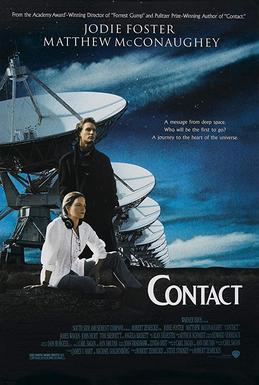
One of my favorite movies
I love the movie CONTACT. I loved it when it came out in 1997 and I have rewatched it on a number of occasions and still love it. Its fundamentally optimistic view of the universe and our place in it is one that resonates with me and informs both what I choose to read and what I choose to write.

Some of the quotes from the movie have become part of our family vernacular. There's a part, early in the movie, when Ellie Arroway is a young ham radio operator and her father is coaching her at her radio rig not to turn the dial too quickly. He tells her "Small moves, Ellie, small moves." And that has become a guide in my own life.

I have been writing and writing and writing for a dozen years and a dozen novels. Over that time, I've gone from an overly optimistic newb with dreams of fame and glory to a seasoned in-the-trenches author with 6 books in the marketplace and stripped-down realistic goals of what success means.

It's been over a decade of small moves.

Many of them enhanced by luck and timing.

This year, I was offered the opportunity to participate in the Boston Book Festival on a panel sponsored by Biblioboards and the Library Journal Self-e program. Through them, I was also connected to the Belmont Public Library and their Indie Author Day program.

These feel like big opportunities that have emerged from all those small moves. And I remain optimistic that each of those small moves are moves in the right direction.

So if you're in the Boston area, please come by for either Indie Author Day on October 8th and/or the Boston Book Festival on October 15th. I'd love to see you there!

#SFWApro


email:

  • Free eBook
  • Free/DRM-free short fiction
  • publication news

Friday, July 29, 2016

Where I am now


First, the physical. As in where I am literally. That would be in Canada. In Mt. Tremblant to be precise. We've traveled up here for a few days so my husband can drive like a maniac on the racetrack while I enjoy the solitude and a rented house with wifi. And, of course, the croissants.

Original cover art, copyright 2016 Chris Howard

Next, an update as to the state of my publishing life. 3 years ago, I co-edited a passion project - an anthology of SF&F stories written by fellow graduates of Jeff Carver and Craig Shaw Gardner's Ultimate Science Fiction Writing Workshop. Pen-Ultimate was a wonderful collection to work on and we chose a workshop model to produce it and decided to donate the proceeds to the SFWA emergency medical fund.

About a year after it was published, we decided to produce a follow up. Pen-Ultimate II took longer than I had anticipated, partly because of some chaotic and stressful personal life events during its development, partly because I was so busy with my personal writing. But, at long last, my co-editor (Talib S. Hussain) was able to keep me on track and we completed the manuscript.

Pen-Ultimate II contains stories by 12 authors, spanning the gamut from fantasy to science fiction to the just plain weird and as with the prior volume, all proceeds will be donated to the SFWA emergency medical fund.

You can purchase it in any of these venues (BN, iBooks, and print forthcoming):
Amazon
Kobo
Google Play

The novels of Halcyone Space

And finally, an update on my own writing. Just about 2 months ago, DREADNOUGHT AND SHUTTLE was released. Not only has it been selling well, sales of all three books in the series have been selling consistently as well - enough so that this latest book has earned back its production expenses in about 6 weeks and enough so that all three books have remained on the top 10 best sellers on one of Amazon's sub-categories of SF books.


As of this week, it's time to get some serious writing done on the as yet unnamed book 4 in the Halcyone Space series.

It is actually fitting that I am here in Mt. Tremblant, starting a new project. It was here, in 2004, where I started my first novel - also while on family holiday. While that one is (and will remain!) safely 'trunked', there is something comforting about the cycle of my writing life. Nearly all my novels have started in the summer. Last year, DREADNOUGHT AND SHUTTLE came into being on the shores of Lake Champlain in Vermont at a dear friend's summer home.

As I type this, a cup of coffee is cooling next to my laptop. The house is silent. I have nothing to distract me. The last time I sat down to draft words on a shiny, new project was quite some months ago. I have been in editing and production mode for what feels like a long while. I feel 'out of writing shape.' My mind is far too cluttered.

Even as I crave the focus of new words and new story, I fear I have forgotten how to begin. I have to remind myself that this, too, is familiar. And I am not starting with nothing. The characters of Halcyone Space are old friends. Old friends who have been patiently (and not so patiently) waiting for me to return.


#SFWApro


email:

  • Free eBook
  • Free/DRM-free short fiction
  • publication news

Wednesday, May 18, 2016

You Must Read This


I rarely write formal reviews, and even more rarely on purchasing platforms like Amazon because as a writer, it can often feel like a conflict of interest. (Even as I appreciate any reader leaving reviews for my novels - yes, I feel conflicted.)

What I do instead is rave about the books I have loved. Bug friends, readers, social media followers, random strangers on the street to READ THIS BOOK.

Maybe I come across a handful of such books in a year. GROWER'S OMEN is one such book. While it is book 2 in the Karmacorp "Fixers" series, I believe it can be read as a standalone. But I recommend you read them both. I really liked book 1. And I loved book 2.

Audrey Faye has tangled the best elements of fantasy and science fiction in this series about the Fixers of Karmacorp - individuals who have psychic talents working in an organization dedicated to helping to keep the universe in one piece. The Fixers have vastly different talents and personalities. Tyra Lightbody, the main character and POV voice of this novel is a Grower. She has a special gift with plants and manipulating subtle energies around her and she's sent, as a lone agent, to a biodome reporting strange behavioural problems affecting some of the station personnel.

What she finds there is no ordinary problem, but a moral dilemma that forces her to make a choice that might alienate her from everything and everyone she cares about. 

It's been several books since I found a character who I connected so strongly with. I raced through this book, fearful of what Tyra had to do and hoping she would emerge unscathed. I was emotionally fully invested in her story and that happens rarely in my reading life now.

Skillful writing, fascinating worldbuilding, fully realized characters, emotional stakes: Grower's Omen has it all and then some. It moved me and I needed to read it. Maybe you do, too.


email:

  • Free eBook
  • Free/DRM-free short fiction
  • publication news

Wednesday, July 29, 2015

Sightings in the Wild

I've been busy, here and there, hither and yon. Which is to say, there are four guest posts of mine out there on the great wide web from the past few weeks.

Why is a raven like a writing desk? Guest post for fellow word-smith, Julianne Douglas, writer of historical fiction, on how my poetry informs my fiction.  (From my intro to the post:)
Having been a poet for a far longer time than I have been a writer of fiction, I maintain that poetry - or at least the tools of poetry - underlies all effective writing. Not only that, but in writing speculative fiction, those tools can enhance world building and reader immersion in fundamental and crucial ways.

The poetic tools I'm going to focus on are specificity, musicality, and comparisons. All three can heighten the reading experience of your novel, especially novels of speculative fiction.

Interview on Addicted to Words, by crit partner and YA writer, Candie Campbell.
In which I answer questions about my favorite characters, books (mine and others), and show off some of my pottery.

My post on The Scriptors blog, Ithaka Rising: By the numbers, where I detail the sales/earnings in the first few weeks of my newest release. 

And, last, but not least, a long and detailed post for Susan Spann's blog, Spann of Time on the tasks involved in being a writer-publisher. Susan is both a writer (her Shinobi Mystery series is EXCELLENT) and an intellectual property lawyer, who runs the excellent twitter chat #publaw. (From my intro to the post:)
. . . I have just published my 5th novel. One of my books has sold nearly 10,000 copies and spent much of last summer on the Amazon best seller lists. So am I a breakout success? That entirely depends on what you consider a success.
By the ‘can you support your family on your art’ metric, no. But very few writers can reach that high bar. I measure my success on a very different metric: Have I learned to put out a product that is indistinguishable from what you would find from any small or large publisher? Yes. Do those books sell in the open marketplace? Yes. Do those books get favorably compared to traditionally published books in similar genres? Yes.
Plenty of news and views of yours truly, along with some (I hope) useful information about the world of indie-publishing and the writing life. 

#SFWApro

 ______________


Monday, July 20, 2015

The Subjectivity of Reviews, redux

image from Open Clip art, in the public domain


First: some caveats/ground rules. Please, no nasty comments directed at the reviewers. In fact, no arguing with reviewers at all. If you wish to express solidarity by sharing some of the 'best' negative reviews sent your way, you can excerpt them or link to them in a comment. Attacking a reviewer on behalf of an author you enjoy is also neither useful or appropriate.

I never, ever engage with reviewers, except on rare occasions to thank them for their time (and only when they are book bloggers/reviewers I have reached out to, rather than readers who review on Amazon, etc.) I don't think I need to explain why arguing/badmouthing a reviewer over a negative review is wrong.

But that doesn't mean we can't talk about reviews and use examples of both positive and negative ones to illustrate the incredible subjectivity of opinion.

I've talked about this before: Reviews are opinions. And as such, they aren't inherently 'right' or 'wrong'. They are a reader's reactions and experience. There may be times where the creator is bemused by the reviewer in that they see something that was not actually in the piece being assessed. That, too, is subjectivity at play.

I wanted to illustrate this with two recent reviews I received for ITHAKA RISING. One was a glowing, five-star review from a book blogger who has read and enjoyed other books of mine. One was a critical two-star review from a book reviewer who obtained the book via NetGalley.

What fascinated me was the different experiences of the two reviewers around the same issues: characters who are competent and gifted in several skill areas.
Barre lives, breathes, thinks and communicates in music. He is genuinely gifted, but unappreciated by his career military physician parents, although respected by his younger brother, Jem the resourceful coding genius. Jem exceeds Halcyone Captain Ro Maldonado’s coding talents by light years, which is saying something.

vs:
Jem is speshul. [sic] He’s a brilliant and caring kid that behaves better than his parents whom you just want to hug while ruffling his hair. . . .  The characters of Ro and Barre are also brilliant and super speshul. [sic] They can hack any system, fix any ship and find a hidden planet that the Commonwealth with all their military might, have not found in 40 years,…. in a day. Riiiiiiight.

And this, in looking at characterization:
Featuring a feisty lesbian heroine, a multicultural cast spanning three generations and a search and rescue mission involving a handicapped pre-teen, a wounded woman warrior with a prosthetic limb and a crone coding goddess, Ithaka Rising delivers diversity in spades.

vs:
The characters just fell flat. Developing all the characters that wear their emotions on their sleeves does not create depth nor does it balance the character in opposition to their brilliant genius personas.

Of course, one of these reviews was a huge ego booster, the other, not so much. But beyond that, they are both valid commentary. My only reaction to the more critical of the two reviews is my own personal aversion to snark. It's far easier for me to take in feedback when it's presented free from the emotional overtones, but even that is just a personal thing. The reviewer is not writing the review for the author, but for other readers.


I recently had a conversation at Readercon about the book turned mini-series JONATHAN STRANGE AND MR. NORRELL. I pretty much hated it. Couldn't read past the third chapter. I found it overwritten, pretentious, and poorly paced. My lunch companion had loved it, and was enjoying the TV adaptation. We did not try to convince the other how 'wrong' they were. We did not devolve into calling one another stupid poopy heads. We simply laughed and kept talking.

Of course, there is a difference between a critical review and a personal attack. And I have received reviews that bordered on the latter (sidebar: I don't consider this one to be in that category). I still don't believe in engaging over an ad hominum attack. Why not? Because I actually think that kind of obvious nastiness is pretty evident to readers of reviews and reflects more poorly on the reviewer than the item reviewed.

And finally, even one's favorite, most beloved, award-strewn book will garner one- and two-star reviews. I'd be wary and concerned if my work had none. What that would tell me is I hadn't reached a wide enough audience.

If you are a book blogger/reviewer, ITHAKA RISING is available to request via Net Galley through the end of August.

It is also available in all eBook formats as well as in trade paperback. Purchase venues can be found here.

#SFWApro
 ______________


Saturday, June 27, 2015

Happy Book Birthday ITHAKA RISING!


Cover art copyright 2015, Chris Howard

Happy Book Birthday to ITHAKA RISING!

One year ago, DERELICT burst into the world, fueled by incredible luck and timing, and hit the best seller lists on Amazon. What started with a junked spaceship and a computer programmer driven to escape her abusive father continues in ITHAKA RISING, book 2 of Halcyone Space:

A derelict ship and a splintered crew are not the rewards Ro had hoped for when she helped disrupt her father's plans to start a war with smuggled weapons. But with the responsibilities of full Commonwealth citizenship and limited resources, she is forced to take her father's place working as an engineer on Daedalus station while she and Barre try to repair their damaged freighter, Halcyone. Barre's brother, Jem, is struggling with the disabling effects of his head injury, unable to read or code. His only hope is to obtain a neural implant, but the specialists determine he is too young and his brain damage too extensive.

When Jem disappears, his trail dead ends at the black market. Ro and Barre race to locate Jem before he sells his future, risking his mind for an illegal neural implant. But they're not the only ones looking for "The Underworld" and its rogue planet, Ithaka. What they find endangers more than just the three of them and forces them to confront a very different truth about the war they believed was ancient history.

I would be pretending a degree of cool and calm I really don't have if I said I wasn't concerned about the book release. All my writerly insecurities have come out to play, in force. They try to tell me that DERELICT was a fluke. That ITHAKA RISING can't possibly enjoy the same success. That I was foolish to believe I had any sort of traction in the marketplace. That I'm a poser and a fraud and an asteroid will strike our house and velociraptors will eat my dogs.

Catastrophize much?

Imposter syndrome, I am in you.

The thing is, this happens every single time I put a project out into the world. It probably will always be the case. The blessing/curse of being an artist is that intense sensitivity to both the highs and lows of the creative life.

A book release is both at the same time: the high of seeing a project through from the wisp of an idea to a complete reality. The low of the fear that this intense work no longer is under your control. When I look back through the past year of creating ITHAKA RISING, I can honestly say I am proud of the work I put in. And I am honored to be sharing these characters and their story with you.

 
Jem shut his eyes tight, hoping the meds would ease the symptoms. Passengers were encouraged to fixate on a still point in the distance during a jump. The display screens helped by projecting a simple vista with parallel lines, like a forest, or monorail tracks. Something that gave a geometric reference helped the strange wobbly feeling that jumpers experienced from being slightly out of temporal phase. But Jem knew that trying to stare straight ahead would only make things worse for him.


It was like he was jumping all the time, his body at war with the signals from his brain and his eyes and ears. The times he had jumped since his injury were miserable. He braced himself. The ship spiraled into the wormhole. Colors swam across his eyelids. A star-scape sparkled through his mind. His vertigo surged and he lost all sense of his own boundaries. Jem knew that it was impossible for his body to actually turn inside out, but that’s what it felt like. Nothing held. There was no up or down, no stable gravity. His thoughts fractured into a thousand glass shards.


The memory of his latest consult replayed like a vid with a sync glitch between visual and audio tracks. After his parents had left the room, Jem asked the question that had been burning in him for weeks. The doctor’s mouth moved and then her answer hung in the air, the sound cycling in frequency from low to high, from slow to fast. “I’m afraid you’re far too young. And even if you weren’t, the damage may be too great for your brain to integrate the implant. I’m sorry.”

Sorry.

Soooooorrrrrrrrrrryyyyyy.

Sor.

Ry.


The word melted. The colors behind Jem’s eyes flared brighter and brighter, melding to a white that seared his vision.


Pain blossomed in the space the colors left behind.


After what seemed like an eternity, his body coalesced back onto the cushioned berth. The all-clear sounded.


One jump down. Two to go.


ITHAKA RISING is available in all eBook formats and as a trade paperback and can be purchased at all major online retail outlets.

Amazon
KOBO
iBooks
Google Play
(BN forthcoming)
Paperback (Amazon)

Signed paperbacks are available. Please contact me via email. (lisa@ljcohen.net)


#SFWApro
 ______________